
Doors and Windows
Drafty Windows and Sticking Doors: What These Signs Mean
7 min read
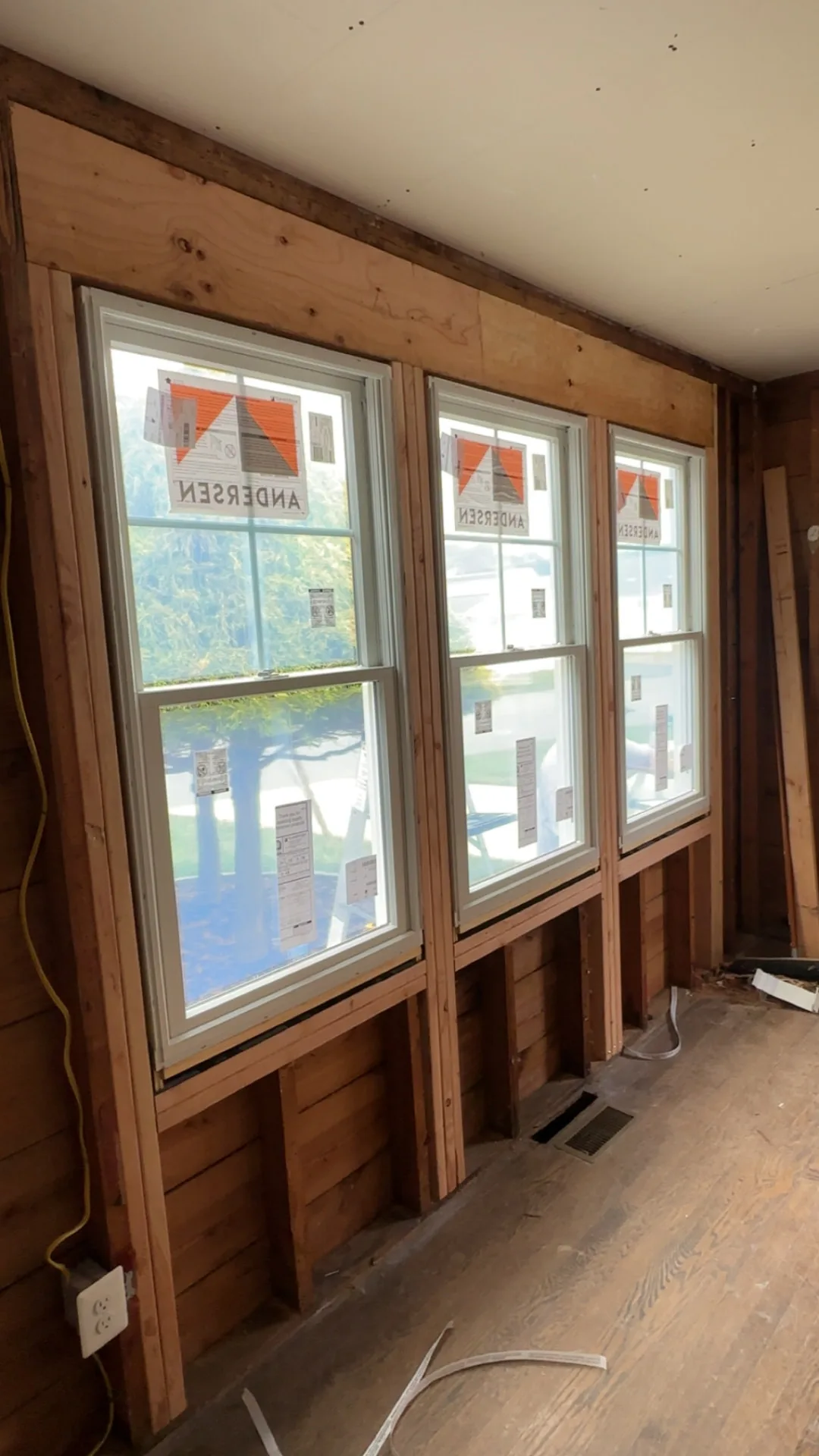
Drafty windows and sticking doors usually come down to one of four things: seasonal movement, worn weatherstripping, a failed seal, or an opening that is out of square. Telling them apart takes about fifteen minutes, and it decides whether you need a small repair or a new unit.
We get these calls all winter. Before you spend money on replacement windows you may not need, here is how we work out what is actually going on.
Why is my door suddenly sticking?
If it sticks in humid weather and works fine in winter, that is wood swelling and it is normal. If it sticks year round and got worse over time, the opening has moved.
Watch where it binds. Rubbing at the top of the latch side usually means the door or the jamb has shifted. Dragging on the floor points at hinges, or at a settled subfloor underneath.
Look at the gap around the door with it closed. It should be even all the way around. A gap that is tight at one corner and wide at the opposite one means the opening is out of square, and no amount of planing the door will really fix that.
Reading the symptoms
Match what you are seeing to the likely cause before you buy anything.
| What you notice | Usual cause | What it takes to fix |
|---|---|---|
| Door sticks only in humid months | Wood swelling with the season | Adjust, or relieve the edge and seal it |
| Door will not latch, gap uneven | Opening shifted or hinges worn | Reset hinges or re-hang the door in a squared jamb |
| Cold air along the bottom of a door | Worn sweep or threshold | Replace the sweep, adjust the threshold |
| Draft you can feel at the sash | Failed weatherstripping or a worn window | Re-seal, or replace the unit |
| Fog or haze between the panes | The insulated glass seal failed | Replace the sash or the window |
| Draft at the trim, not the window | Gap in the rough opening insulation | Open the casing, air seal, re-trim |
The draft is often not coming from the window
A lot of drafts blamed on windows are coming from the gap between the window frame and the framing around it.
When a window goes in, that space has to be insulated and air sealed. If it was stuffed loosely or skipped, you feel cold air at the casing even though the window itself is fine. You can test it on a windy day by holding your hand at the trim line rather than at the glass.
That is a repair, not a replacement. We pull the casing, seal the opening properly, and put the trim back. It costs a fraction of a new unit.
When replacement is the right call
Replace when the glass seal has failed, when the sash no longer closes tight against a sound frame, or when the frame itself is rotted.
Fog between the panes cannot be repaired by sealing anything on the outside. That haze means the insulated unit has lost its seal, and the window is no longer doing the job you paid for.
Rot in the frame or sill is the other clear case. Once the wood is soft, new weatherstripping has nothing solid to press against. We check the sill and the bottom corners first, since that is where water sits.
What salt air and coastal wind add to the problem
Houses near the water get wind driven rain at angles that a sheltered house never sees, and salt speeds up corrosion on hardware.
We regularly find locks and hinges stiff with corrosion, storm doors that rattle out of adjustment, and sills that took years of water at one corner. On exposed elevations, hardware and weatherstripping simply wear out faster.
Flashing matters as much as the window. A unit set without proper flashing and a sill pan will leak eventually no matter how good the window is, and that water usually shows up as a stain below the sill inside.
A fifteen minute check you can do yourself
Do this on a cold windy day for the clearest results.
- 01Close the door and look at the gap all the way around. Note where it is tight and where it is wide.
- 02Open and close it slowly and listen for where it rubs.
- 03Run your hand along the door sweep and the threshold for moving air.
- 04At each window, hold your hand at the sash, then at the casing, and compare.
- 05Look for fog, haze, or mineral marks between the panes.
- 06Press the bottom corners of the sill with a screwdriver, checking for soft wood.
What we do when we come out
We start with the cheap fixes and only recommend replacement when the unit is actually done.
That means adjusting hinges and strike plates, replacing sweeps and weatherstripping, and checking whether the rough opening was ever sealed. Plenty of houses get fixed right there.
When a window or door does need replacing, we take it out, look at what is behind it, repair any rot we find, then set the new unit with proper flashing and insulation and finish the trim inside and out. Doing it that way is the difference between a window that seals for years and one that leaks by the second winter.
Questions we get asked
- Can a foggy window be repaired?
- Not really. The haze means the seal on the insulated glass unit has failed and moisture is inside the assembly. Cleaning the surfaces does nothing. The sash or the whole window gets replaced, depending on the unit.
- My door only sticks in the summer. Is that a problem?
- Usually not. Wood takes on moisture in humid weather and swells, then it shrinks back in the winter. If it is only a seasonal nuisance, a small adjustment and sealing the edges normally handles it.
- Is it cheaper to repair or replace a drafty window?
- Repair is cheaper when the frame is sound and the draft is coming from weatherstripping or an unsealed rough opening. Replacement makes sense when the glass seal has failed or the frame is rotted. We tell you which one you have before you spend.
- Do new windows need a permit in New Jersey?
- It depends on the scope. Straight swaps and work that changes the opening are treated differently, and towns handle it their own way. We check with your town and file the applications when the job calls for it.
Want us to take a look?
Tell us what you have going on. Ronnie will come out, look at the space, and put a written estimate in your hands at no charge.