
Decks
How to Winterize a Deck at the Jersey Shore
7 min read
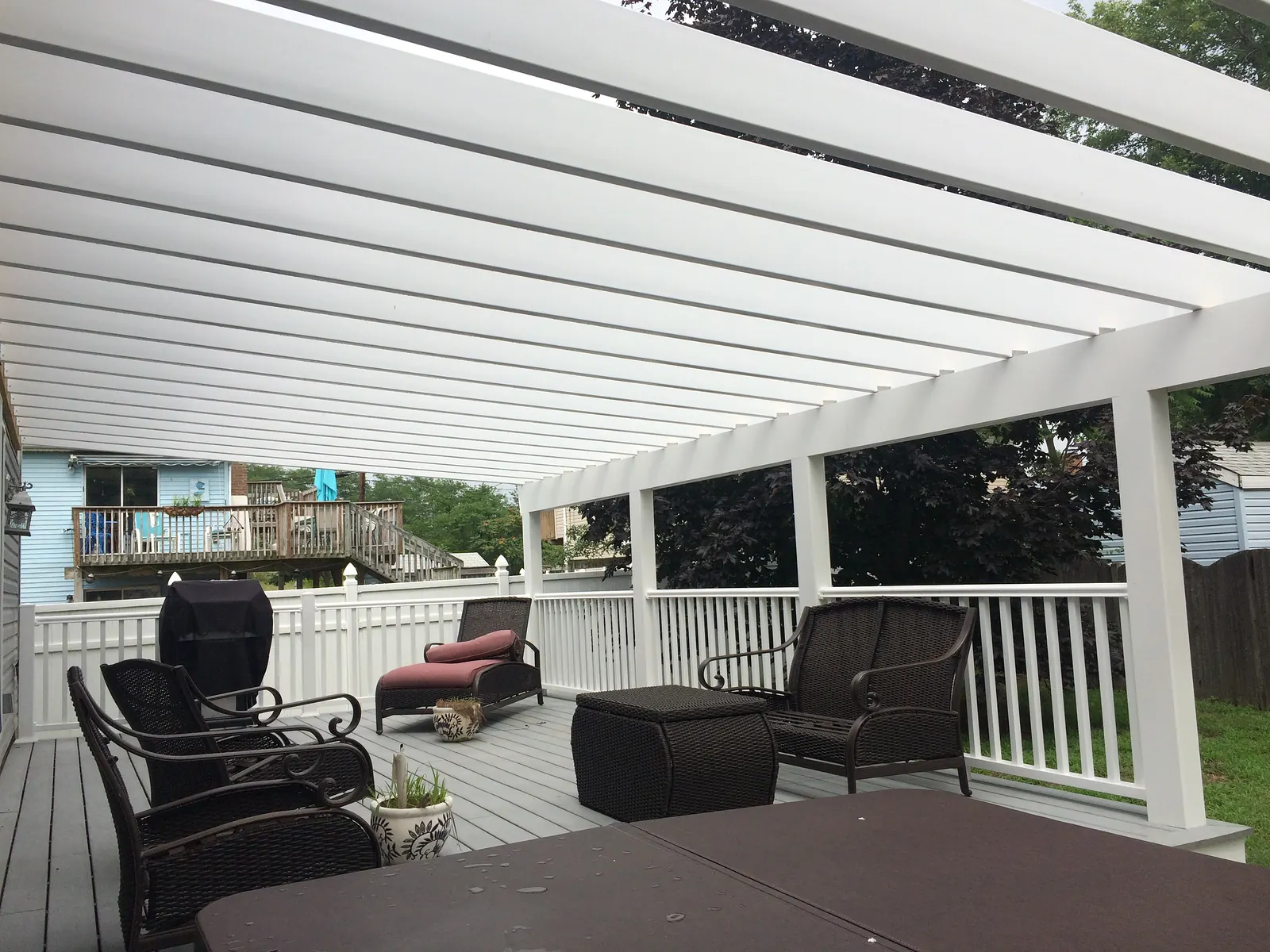
Knowing how to winterize a deck saves you money in April. Most of the damage we see in spring did not happen in one storm. It happened slowly, under wet leaves and melting snow, on a deck nobody looked at from November to March.
We are Ronnie and Tyler Thompson, deck builders based in Union Beach. Decks here take salt air off the Raritan Bay and Sandy Hook Bay on top of a regular Jersey winter. Here is the checklist we give our own customers, in the order we would do it.
What does winterizing a deck actually mean?
It means getting water off the deck and out of the gaps, catching small problems before freeze and thaw make them bigger, and putting things away that would trap moisture all winter.
You do not need special products for most of it. A broom, a putty knife, a hose, and a dry afternoon cover the basics.
Clear the boards and the gaps first
Wet leaves are the biggest winter enemy of a deck. They hold water against the boards, stain them, and feed mildew.
Sweep or blow the whole surface, then run a putty knife down the gaps between boards. Those gaps are how water drains off the deck. Packed with leaves, they hold water against the edges of every board.
Wash with a cleaner made for your decking and rinse well. Go easy with a pressure washer, especially on softwood, because it can tear up the surface.
Source: U.S. EPA, A Brief Guide to Mold, Moisture and Your Home (opens in a new tab)
Walk the deck and look for trouble before the snow
A quick inspection now tells you whether the deck is ready for winter or needs a repair first. Use a flashlight and a screwdriver and check these spots.
- The ledger, where the deck attaches to the house. Look for rust streaks, gaps, or signs that water is running behind it.
- Post bottoms. Push a screwdriver into the wood near the base. It should not sink in easily.
- Hangers, bolts, and screws. Rust bleeding onto the boards means the hardware is going.
- Boards that feel soft, spongy, or bouncy underfoot.
- Railings. Grab each post and push. It should not move.
- Stairs. Treads should be tight and the stringers solid where they meet the ground.
Should you seal a wood deck before winter?
Only if the wood is dry and the weather is warm enough. Every stain and sealer lists a temperature range and a dry time on the label, and late fall often misses both.
If you cannot get a few dry, mild days in a row, wait for spring. A sealer put on damp wood in the cold can peel or never cure, and then you are stripping it off next year.
Composite decks do not need sealing. A good wash before winter is enough.
Wood and composite in winter, side by side
Both kinds of decking get through a shore winter fine with the right care. The care is just a little different.
| Winter task | Pressure treated wood | Composite |
|---|---|---|
| Fall cleaning | Wood deck cleaner, gentle rinse | Cleaner the maker recommends, rinse |
| Sealing | Only on dry wood in mild weather | Not needed |
| Shoveling | Plastic shovel, push along the boards | Plastic shovel only, push along the boards |
| Ice melt | Check the label, rinse in spring | Follow the decking maker's guidance |
| What to watch | Soft spots, splits, rusted hardware | Rusted hardware, debris in gaps, frame underneath |
Snow, ice, and salt air
Shovel with a plastic shovel and push along the length of the boards, not across them. A metal blade catches board edges and screw heads.
Before you use any ice melt, check what your decking maker allows. Some products are hard on wood or on certain composite surfaces. Rinse the deck well in spring either way.
Near the bay, the salt is already in the air. Hot dipped galvanized or stainless hardware handles it. Cheap coated screws and hangers will rust, and winter is when that rust gets a head start.
Furniture, grills, planters, and covers
Anything that sits on the boards all winter traps water under it. Move planters onto risers or off the deck, and store cushions inside.
Do not wrap the deck in a tight plastic tarp. It holds moisture against the wood instead of letting it dry. If you cover furniture or a grill, use a breathable cover.
Keep the grill well away from siding and railings, and put a non combustible mat under it if you grill through the winter.
When a winter problem means calling a builder
Some things are past a weekend fix. Call us if you find any of these.
- 01A ledger pulling away from the house, or water stains on the rim joist inside the basement.
- 02Posts or joists that are soft when you probe them.
- 03Railings that move when you lean on them.
- 04Hangers or bolts rusted thin or broken.
- 05Stairs that rock, sag, or sit on rotted stringers.
Want us to check your deck before winter?
Call Ronnie at 732-575-6641. We will look at the frame, the ledger, and the hardware and tell you straight whether it needs a repair, a resurface, or just a good cleaning.
We build and repair decks in Union Beach, Hazlet, Middletown, Holmdel, Aberdeen, Colts Neck, and Atlantic Highlands.
Questions we get asked
- Should I cover my deck for the winter?
- No. A tarp over the deck traps moisture against the boards and does more harm than good. Clear the gaps, store the cushions, and let the deck breathe and drain.
- Can I use rock salt on my deck?
- Check the label and your decking maker's care guide first, because some ice melts are hard on wood, coatings, or certain composite boards. Whatever you use, rinse the deck well in spring.
- Is it bad to leave snow on a deck?
- A normal snowfall on a sound deck is not a problem. Clearing a path to the door and keeping heavy drifts off is sensible. If you are worried about the frame, that is worth an inspection.
- When is the best time to winterize a deck in New Jersey?
- Late fall, after most of the leaves are down and before the first hard freeze. Pick a dry stretch so the deck can dry after you wash it.
- Can you fix a deck in the winter?
- Many repairs, like replacing boards, hardware, or railing parts, can be done on dry winter days. New footings wait for ground that is not frozen.
Want us to take a look?
Tell us what you have going on. Ronnie will come out, look at the space, and put a written estimate in your hands at no charge.