
Framing
Sagging Floor? Causes, Warning Signs, and Real Fixes
8 min read
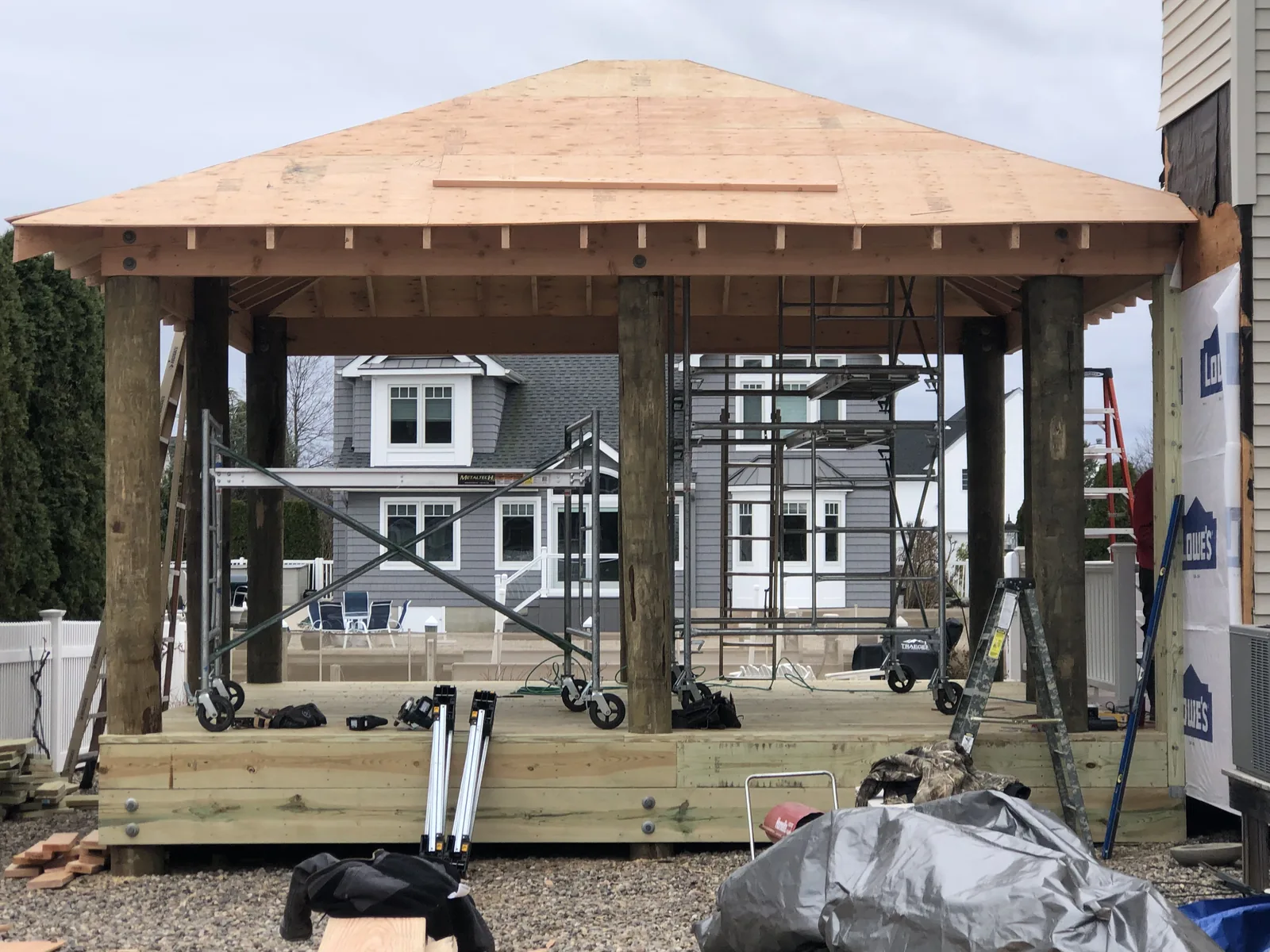
Most sagging floor causes come down to the framing underneath: a joist that bends, cracks, or rots, or a beam or post below that has stopped doing its job. The floor you walk on is just where it shows up.
We are Ronnie and Tyler Thompson, framers and remodelers based in Union Beach for 40 years. Framing is the part of a house we know best. Here is how we tell a harmless old floor from a real problem, and how we fix the ones that need it.
What causes a sagging floor?
The usual causes are joists that were too small for their span, water damage, joists cut by past plumbers or electricians, and posts or beams that have settled or rotted. Often it is more than one.
A small amount of give in a floor is normal. A dip you can see, a slope you can feel, or a bounce that rattles the dishes is not.
Sag, bounce, or soft spot: three different problems
What you feel underfoot points to where the trouble is. This is how we sort it out before we ever open anything up.
| What you notice | Usual cause | Usual fix |
|---|---|---|
| Dip in the middle of a room | Joists bending over too long a span | Sister the joists or add a beam |
| Floor slopes toward one line | A beam, post, or footing below has settled | New post, footing, or beam support |
| Bouncy but level | Joists undersized or missing blocking | Blocking, bridging, or sistering |
| Soft or spongy spot | Rotted subfloor, often from a leak | Fix the leak, replace subfloor, repair joists |
| Sag near a wall or doorway | Rot at the sill or a notched joist | Replace the damaged framing |
Warning signs that point to the framing
A sagging floor rarely shows up alone. These clues usually come with it.
- Doors that stick or swing open on their own.
- Cracks in drywall or plaster running from the corners of doors and windows.
- Gaps opening up under baseboards.
- Tile that cracks in a line across the floor.
- Dishes or glasses that rattle when someone walks by.
Water is behind most of what we find
Rot needs moisture, and in shore homes moisture is everywhere. A slow leak under a toilet or tub, a damp crawlspace, or water getting in at the sill can soften framing for years before anyone notices.
That is why the first step is always to find and fix the water. The EPA's guidance is the same thing we tell customers: control the moisture first, or the problem comes back.
A soft spot near a toilet or tub is almost always a leak that has rotted the subfloor. It is worth looking at sooner rather than later.
Source: U.S. EPA, A Brief Guide to Mold, Moisture and Your Home (opens in a new tab)
Joists cut by past trades
Over the years, plumbers, electricians, and heating installers cut holes and notches in joists to run their lines. Some cuts are harmless. A deep notch in the wrong spot can take away much of a joist's strength.
We look at every cut near the sag. A badly notched joist gets reinforced or replaced, and the line gets rerouted if it needs to.
How we fix a sagging floor
Every repair follows the same order, because fixing the floor before the cause just wastes your money.
- 01Find the cause from above and below, in the basement or crawlspace.
- 02Stop any water getting to the framing.
- 03Put up temporary supports so the floor is safe while we work.
- 04Repair the framing: sister or replace joists, add a beam, or add posts on proper footings.
- 05Lift the floor slowly, over time, instead of all at once.
- 06Have the work inspected if it needs a permit, then close it up.
Why we lift a floor slowly
A floor that sagged over decades should not be forced flat in an afternoon. Jacking too fast can crack plaster, tile, and drywall above and pop doors out of square.
We raise it a little at a time. Sometimes a floor that has been stable for years is better left with a slight dip and stiffened instead of fully lifted. We will tell you which one makes sense.
Do you need a permit to fix floor framing?
Structural repairs usually do. New Jersey runs construction permits under its Uniform Construction Code, and adding beams, posts, or footings is the kind of work an inspector wants to see.
We file the application and meet the inspector. You do not have to figure out the paperwork.
Source: New Jersey Department of Community Affairs, Uniform Construction Code (opens in a new tab)
Have us look at your floor
Call Ronnie at 732-575-6641. We will look at the floor from above and below, tell you what is causing it, and give you a written estimate at no charge.
We do framing repairs in Union Beach, Hazlet, Middletown, Holmdel, Aberdeen, Colts Neck, and Atlantic Highlands.
Questions we get asked
- Is a sagging floor dangerous?
- Many old floors sag a little and have been stable for decades. A floor that is getting worse, feels soft, or sits over rotted or cracked framing needs attention soon. If you are not sure which you have, have someone who frames houses look at it.
- What is sistering a floor joist?
- Sistering means fastening a new joist alongside a weak or damaged one so the two carry the load together. It is a common repair, but it only works once the cause, like a leak or a settled post, has been fixed.
- Can you fix a bouncy floor without tearing it up?
- Often, yes. If we can reach the joists from a basement or crawlspace, we can add blocking, sister joists, or add a beam from below without touching the finished floor.
- Why is my floor soft near the toilet?
- Almost always it is a slow leak at the toilet seal or supply line that has rotted the subfloor. The fix is to stop the leak, cut out the bad subfloor, repair any damaged joists, and reset the toilet.
- How long does a floor framing repair take?
- A simple repair from below can be quick. Jobs that involve new footings, a beam, or slow lifting take longer. We give you a schedule after we see what is going on.
Want us to take a look?
Tell us what you have going on. Ronnie will come out, look at the space, and put a written estimate in your hands at no charge.