
Trim and Millwork
Wood Trim Guide: Choosing the Right Wood for Each Room
7 min read
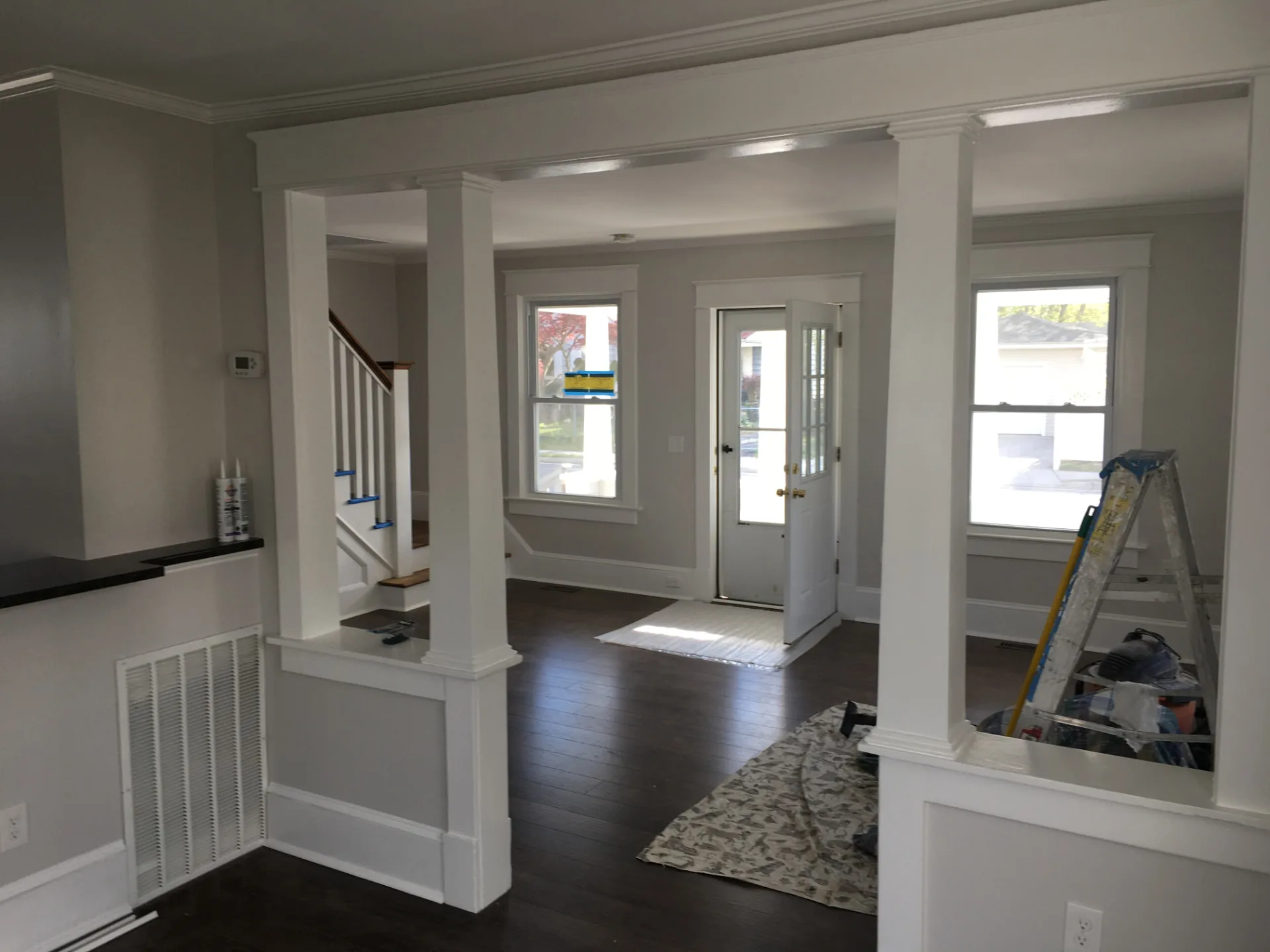
Wood trim is what makes a room look finished. Crown, casings, baseboard, and window stools frame everything else, and the right wood for each spot depends on the finish you want and what the room puts it through.
Every piece of trim we install is solid wood, most often solid pine, poplar, or oak.
We are Ronnie and Tyler Thompson, and finish carpentry is a big part of our work across Monmouth County. Here is how we choose wood trim and how we put it up so it stays tight for years.
Why choose wood trim?
Wood takes a hit and holds a nail well. If a baseboard gets dinged by a vacuum or a pair of boots, it can be filled and sanded instead of replaced.
It can also be painted or stained, and it can be shaped, coped, and scribed to fit walls that are not perfectly straight. That is why it remains the standard for good finish carpentry.
Paint grade vs stain grade wood
Paint grade wood is chosen to take paint well. Small color differences and minor marks do not matter because the paint covers them. Solid poplar and solid pine are common choices.
Stain grade wood is chosen for its grain, because the grain is what you see. Oak is a common pick, and clear solid pine works when you want a lighter, simpler look. Stain grade stock costs more and every joint has to be tighter, since there is no paint to hide a gap.
Common trim woods compared
Here is how the woods we use most often compare on the things that matter in a real house.
| What matters | Solid pine | Poplar | Oak |
|---|---|---|---|
| Best finish | Paint or stain | Paint | Stain or clear |
| Look under stain | Light, soft grain | Uneven, often greenish | Strong, open grain |
| Dent resistance | Fair | Good | Very good |
| Relative cost | Lower | Middle | Highest |
| Where we use it | Bedrooms, halls, cottage style rooms | High traffic painted rooms | Dens, staircases, showpiece rooms |
Room by room, what we usually install
These are our starting points. Your house and your taste can change them.
- Living rooms and bedrooms: painted solid poplar or solid pine for crown, casings, and base.
- Mudrooms and entries: a harder solid wood baseboard that can take a kick, painted or stained.
- Bathrooms and laundry rooms: wood that is primed or sealed on every face and every cut end before it goes up.
- Kitchens: well sealed wood near the sink and dishwasher, with the bottom edge of the base kept tight to the floor and caulked.
- Stained rooms, like a den or a staircase: stain grade wood throughout, with matching grain on the pieces you see most.
Moisture and wood movement in shore homes
Wood swells a little when the air is damp and shrinks when it dries out. In homes near the Raritan Bay and Sandy Hook Bay, basements and baths stay humid much of the year, so we plan for that movement.
We bring trim into the house to adjust before we cut it, and we seal every cut end. Keeping indoor humidity in a steady range also helps joints stay closed through the seasons.
Source: U.S. EPA, A Brief Guide to Mold, Moisture and Your Home (opens in a new tab)
Painted or stained: finishing wood trim
For painted trim, we prime all sides, fill nail holes, sand them flush, and caulk where the trim meets the wall. Two finish coats in a durable trim paint hold up to cleaning.
For stained trim, we sand evenly, test the stain on a scrap from the same batch, and use wood filler that matches the finished color. Clear coats protect the color and make the trim easier to wipe down.
What good wood trim work looks like
Check for these on any trim job.
- 01Inside corners are coped, not just mitered, so they stay tight as the house moves.
- 02Outside miters are glued and pinned so they do not open up.
- 03Wood is brought into the house to adjust before it gets cut and installed.
- 04Every cut end is primed or sealed.
- 05Nail holes are filled and sanded flush before finishing.
- 06Caulk is used where trim meets the wall, not to hide bad joints.
See trim samples in your own home
Call Ronnie at 732-575-6641. We will look at your rooms, show you sample profiles, and give you a written estimate at no charge.
We do interior trim and millwork in Union Beach, Hazlet, Middletown, Holmdel, Aberdeen, Colts Neck, and Atlantic Highlands.
Questions we get asked
- What is the best wood for painted trim?
- Solid poplar and solid pine are our usual choices. Both take paint well and stay straight. Poplar is a bit harder, so we lean on it where trim gets bumped.
- Can wood trim go in a bathroom?
- Yes, when it is sealed properly. We prime or seal every face and cut end before installing, and caulk the joints so water cannot get behind it.
- Can you stain poplar trim?
- You can, but it often stains unevenly and can show green or dark streaks. If you want a stained look, we usually recommend oak or clear pine instead.
- Is all of your trim solid wood?
- Yes. We install solid wood trim, most often pine, poplar, or oak, and pick the species for the finish you want and the room it goes in.
- Do you match old trim in older homes?
- Yes. We can match many existing profiles or build up a similar look from stock pieces, so new rooms blend with the rest of the house.
Want us to take a look?
Tell us what you have going on. Ronnie will come out, look at the space, and put a written estimate in your hands at no charge.